Abdominal compartment syndrome
Background
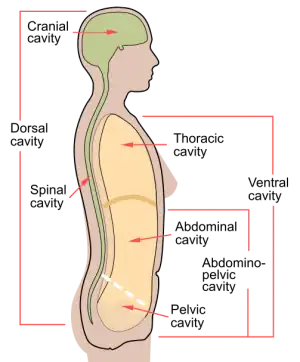
- Organ dysfunction caused by intrabdominal hypertension
- Increased intrabdominal pressure resulting in decreased organ perfusion, impaired hemodynamics
Pathophysiology
- Abdominal perfusion pressure = MAP - intrabdominal pressure
- Build up of fluid or blood within the peritoneum or retroperitoneum
- And/or decrease in abdominal wall compliance
- Increased pressure within cavity of fixed volume → hypoperfusion of abdominal organs
- Also causes restriction of diaphragmatic excursion and impaired central venous return
Causes
- Acute Pancreatitis
- Ascites
- Diffuse peritonitis
- Large volume fluid resuscitation
- Reperfusion of ischemic bowel
- Retroperitoneal hemorrhage
- Small bowel obstruction
- Trauma
Clinical Features
- Most patients are critically ill and unable to communicate
- Decreased central venous return
- Increased JVP
- Increased ICP
- Decreased cardiac preload
- Increased cardiac afterload
- Increased intrathoracic pressure
- Decreased lung compliance (will cause high peak pressures in vented patients)
- Decreased functional residual capacity
- Worsened V/Q mismatch
- Oliguria, renal failure
- Bowel ischemia
Differential Diagnosis
<translate>
Abdominal Trauma
- Abdominal compartment syndrome
- Diaphragmatic trauma
- Duodenal hematoma
- Genitourinary trauma
- Liver trauma
- Pelvic fractures
- Acetabular pelvic fractures
- Open book pelvic fracture
- Straddle pelvic fracture
- Pelvic avulsion fracture
- Retroperitoneal hemorrhage
- Renal trauma
- Splenic trauma
- Trauma in pregnancy
- Ureter trauma
</translate>
Evaluation
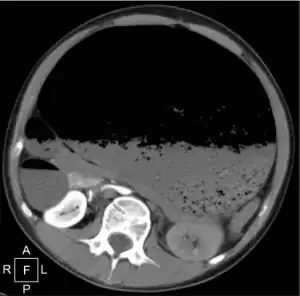
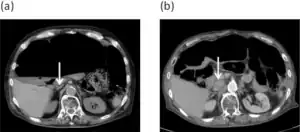
Workup
Physical exam is neither sensitive nor specific
- Obtain bladder pressure
- Normal = <12 mmHg
- Intra-abdominal hypertension (IAH) = 12 - 20 mmHg
- Concern for abdominal compartment syndrome = >20 mmHg (also requires evidence of end-organ damage)
Diagnosis
- Abdominal compartment syndrome = IAH >20 mmHg PLUS end-organ damage
- Abdominal perfusion pressure <60 mmHg suggests abdominal hypoperfusion[1]
- Note that IVC scanning for volume status is especially unreliable as collapse may not represent volume depletion in the context of high intra-abdominal pressures[2]
Management
Nonoperative
Often first line approach when no abdominal injury present[3]
- Limit fluid resuscitation
- Nasogastric and bladder decompression
- Electrolyte repletion
- Antibiotics
- Pressors with goal MAP 65
- CRRT
- Percutaneous fluid drainage (remove ascites if present)
- Treat pain and adequately sedate
- Reverse Trendelenburg
- Consider metoclopramide
Operative
Definitive treatment
- Laparotomy provides decompression
- High complication rate
- No guidelines for timing of closure
Disposition
- Admit
See Also
- "Traditional" compartment syndrome
External Links
References
- ↑ Al-Dorzi HM et al. Intra-abdominal pressure and abdominal perfusion pressure in cirrhotic patients with septic shock. Ann Intensive Care. 2012; 2(Suppl 1): S4.
- ↑ Bauman Z et al. Inferior vena cava collapsibility loses correlation with internal jugular vein collapsibility during increased thoracic or intra-abdominal pressure. J Ultrasound. 2015 Dec; 18(4): 343–348.
- ↑ Hunt, L., Frost, S. A., Hillman, K., Newton, P. J. and Davidson, P. M. (2014) ‘Management of intra-abdominal hypertension and abdominal compartment syndrome: a review’, Journal of Trauma Management & Outcomes, 8(1).