Abdominal pain (peds)
<languages/> <translate> </translate> This page is for pediatric patients. For adult patients, see: abdominal pain,abdominal pain in pregnancy, and abdominal pain (geriatrics) <translate>
Background
- Bilious emesis is a surgical emergency until proven otherwise
Clinical Features
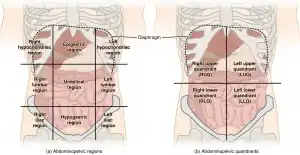
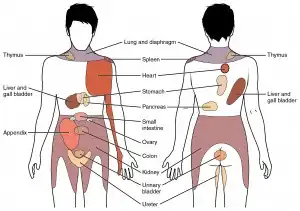
- Abdominal pain
- May be associated with nausea, vomiting, or diarrhea
- Fever may be present in pain from infectious etiology
Differential Diagnosis
</translate>
Pediatric Abdominal Pain
0–3 Months Old
- Emergent
- Nonemergent
3 mo–3 y old
- Emergent
- Nonemergent
3 y old–adolescence
- Emergent
- Nonemergent
<translate>
Evaluation
Depends on location and history
- Consider:
- hCG
- Consider ectopic pregnancy in any female of reproductive age
- Urinalysis
- CBC
- Chemistry
- hCG
- Possible imaging:
- Ultrasound
- Appropriate for intussusception, ovarian/testicular torsion, gallbladder, pregnancy, appendicitis
- CT
- May be associated with 1/1,000 lifetime risk of malignancy
- Abdominal radiography
- Abdominal plain xray films are specific, but not sensitive. As such, they have very little utility in the workup of pediatric abdominal pain, unless concerned for a foreign body. Do NOT use films to "confirm" a diagnosis of "constipation," as this is not specific and may also be found during surgical emergencies (e.g. appendicitis).
- Ultrasound
Management
- Based on diagnosis
Disposition
- Depends on underlying etiology
- If symptoms are fully resolved and the patient has a benign abdominal exam, most patients go home with return precautions
- In general, unclear cases with continued pain should NOT be discharged home
See Also
- Abdominal Pain
- Pyloric Stenosis
- Meckel's Diverticulum
- Inguinal Hernia (Peds)
References
</translate>