Acute alcoholic hepatitis
Background
Acute alcoholic hepatitis is inflammatory liver disease secondary to alcohol use.
- Spectrum from hepatic steatosis to alcoholic hepatitis to cirrhosis
- History of (usually chronic) alcohol abuse (~80 grams of ethanol daily for 5 years)
- Ranges from subclinical cases to severe multisystem dysfunction
Clinical Features
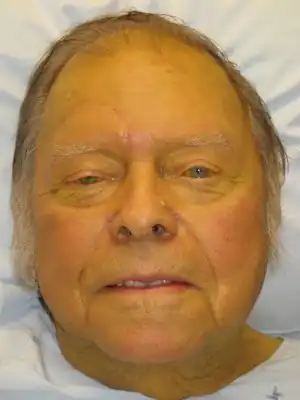


Symptoms
- Abdominal pain
- Nausea and vomiting
- Weight loss / fatigue / anorexia
Signs
- RUQ tenderness
- Jaundice
- Fever
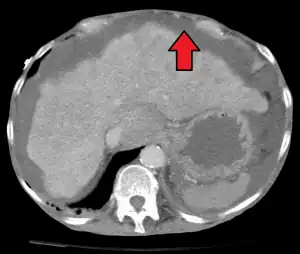
- Hepatomegaly
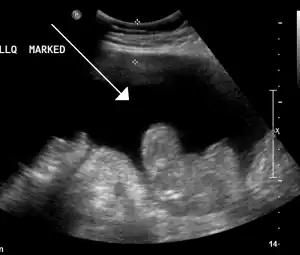
- Ascites
- Encephalopathy
- Spider angioma
- GI bleed/varices
- Malnutrition
- Symptoms of alcohol withdrawal
Cirrhosis is found in 50-60% of cases of alcoholic hepatitis[1]
Differential Diagnosis
- Alcoholic pancreatitis
- Gallstones
- Budd-Chiari syndrome
- Viral hepatitis
- Drug-induced hepatitis
<translate>
Causes of acute hepatitis
- Acetaminophen toxicity (most common cause of acute liver failure in the US[2])
- Viral hepatitis
- Hepatitis A
- Hepatitis B
- Hepatitis C
- Hepatitis D
- Hepatitis E
- HSV
- Epstein-Barr virus
- Varicella zoster virus
- Toxoplasmosis
- Acute alcoholic hepatitis
- Toxins
- Mushroom toxicity
- Crotinarius mushrooms
- Gyromitra mushrooms
- Amanita mushrooms
- Ischemic hepatitis
- Autoimmune hepatitis
- Wilson's disease
</translate>
Evaluation
Work Up
Labs
- CBC
- Leukocytosis with elevated ANC
- Chemistry including magnesium and phosphate
- LFTs
- Very high elevations possibly more suggestive of viral or drug-induced hepatitis
- Elevated AST/ALT (characteristically >2:1 and < 500 IU/L)
- GGT alone is less reliable (low sensitivity and specificity)[3]
- Coagulation factors
- Elevated PT/INR
- Lipase if suspect pancreatitis
- Consider viral hepatitis panel
Imaging
- Consider transabdominal ultrasound if concern for:
- Biliary obstruction
- Budd-Chiari syndrome
- Hepatic or biliary neoplasms
Evaluation
- Diagnosis is difficult and relies on a good history[4]
- History of significant alcohol intake
- Clinical evidence of liver disease
- Supporting laboratory abnormalities
- May be nondiagnostic in patients with mild disease or early cirrhosis
- May also have electrolyte abnormalities from malnutrition or alcoholic ketoacidosis
Management
- Control of withdrawal symptoms
- Nutritional support for malnutrition: especially thiamine, folate, pyridoxine, magnesium, phosphate, glucose, and protein
Severe Alcoholic Hepatitis
- Defined as Maddrey's DF score ≥32[5]
- Confers mortality of 20-50% in 30 days
- 1st line therapy: Prednisolone 40mg PO qDay x4wks[5]
- Must assess response to treatment at 7 days with Lille score
- If Lille score >0.45, considered as non-responder and prednisolone should be discontinued[5]
- Must assess response to treatment at 7 days with Lille score
- Pentoxifylline - evidence does not support its use[6]
- Discontinue nonselective beta blockers (e.g., propranolol) to lower incidence of AKI[7]
Disposition
Discharge
- Mild disease/low risk
- Nutritional assessment and intervention
- Discuss alcohol use and recommend strict abstinence
Admit
- High risk defined as MDF ≥ 32, MELD ≥ 18, or presence of hepatic encephalopathy
- Admission should be considered for the above as well as any of the following complications:
- Evidence of active infection
- Renal failure
- Severe coagulopathy and/or liver failure
- Alcohol withdrawal/delirium tremens
Prognosis
- Maddrey Discriminant Function score (MDF)
- Model for End-Stage Liver Disease score (MELD)
- High risk: MDF ≥ 32, MELD ≥ 18, or presence of hepatic encephalopathy[8]
See Also
- Acute hepatitis
- Alcohol
External Links
References
- ↑ Basra, Gurjot,et. al. "Symptoms and Signs of Acute Alcoholic Hepatitis." World J Hepatol. 2011 May 27; 3(5): 118–120.
- ↑ Ostapowicz G, Fontana RJ, Schiodt FV, et al. Results of a prospective study of acute liver failure at 17 tertiary care centers in the United States. Ann Intern Med. 2002 Dec 17; 137(12): 947-54.
- ↑ O'Shea RS, Dasarathy S, McCullough AJ (2010) Alcoholic liver disease. Hepatology 51: 307–328. doi: 10.1002/hep.23258
- ↑ O'Shea RS, Dasarathy S, McCullough AJ (2010) Alcoholic liver disease. Hepatology 51: 307–328. doi: 10.1002/hep.23258
- ↑ 5.0 5.1 5.2 Singal AK, et. al. ACG clinical guideline: alcoholic liver disease. Am J Gastro. 2018; 113: 175-194.
- ↑ Mathurin P, Louvet A, Duhamel A, et al. Prednisolone with vs without pentoxifylline and survival of patients with severe alcoholic hepatitis: a randomized clinical trial. JAMA. 2013;310(10):1033-41.
- ↑ Sersté T, Njimi H, Degré D, Deltenre P, Schreiber J, Lepida A, Trépo E, Gustot T, Moreno C. The use of beta-blockers is associated with the occurrence of acute kidney injury in severe alcoholic hepatitis. Liver Int. 2015 Aug;35(8):1974-82. doi: 10.1111/liv.12786. Epub 2015 Feb 4. PMID: 25611961.
- ↑ O'Shea RS, Dasarathy S, McCullough AJ (2010) Alcoholic liver disease. Hepatology 51: 307–328. doi: 10.1002/hep.23258