Accumulation of proteins (amyloid fibrils) in tissues[1]
Heart and kidneys most commonly affected organs
Causes:
Primary amyloidosis, hereditary amyloidosis
Secondary (due to systemic inflammatory condition)
ESRD-associated (caused by β2-microglobulin amyloids, not filtered out by dialysis membranes))
Senile amyloidosis (causes cardiac amyloid)
Clinical Features
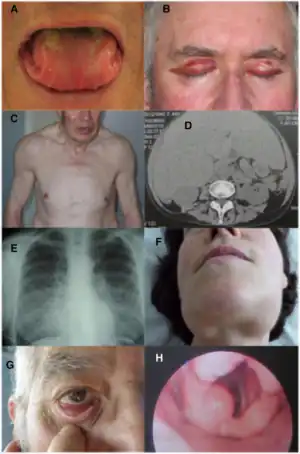
Systemic light change amyloidosis: A. Macroglossia with lateral scalloping of the tongue. B. Bilateral periorbital purpura. C. Pseudo athletic appearance secondary to diffuse muscular infiltration. D. Voluminous hepatomegaly due to primary hepatic amyloidosis. E. Diffuse bilateral interstitial lung disease. F. Submandibular gland enlargement. G-H. Localized AL amyloidosis. G. Nodular conjunctival amyloidosis. H. Laryngeal supraglottic amyloid lump.