Condyloma acuminata
Background
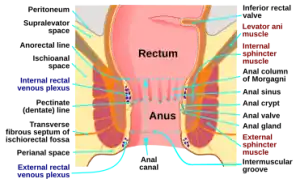
- Also known as anal warts
- Usually related to HPV 6 and 11, which have less neoplastic potential than other HPV strains
Clinical Features
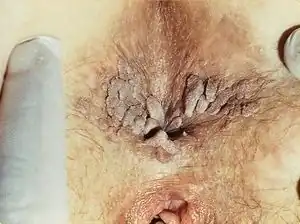
- Vary from dot-like to large papilliform, cauliflower-like lesions
- Pain, itching, bleeding, anal discharge
- Perianal involvement often associated with vulvovaginal and penile lesions
Differential Diagnosis
<translate>
Anorectal Disorders
- Anal fissure
- Anal fistula
- Anal malignancy
- Anal tags
- Anorectal abscess
- Coccydynia
- Colorectal malignancy
- Condyloma acuminata
- Constipation
- Crohn's disease
- Cryptitis
- GC/Chlamydia
- Fecal impaction
- Hemorrhoids
- Internal hemorrhoid
- External hemorrhoid
- Levator ani syndrome
- Pedunculated polyp
- Pilonidal cyst
- Proctalgia fugax
- Proctitis
- Pruritus ani
- Enterobius (pinworms)
- Rectal foreign body
- Rectal prolapse
- Syphilitic fissure
Non-GI Look-a-Likes
- Prostatitis
</translate>
Evaluation
- Clinical diagnosis
Management
- Refer to specialist for electrosurgery, cryotherapy, trichloroacetic acid, or surgical excision[1]
- Podophyllin solution/cream[2]
- Imiquimod 5% cream[3]
Disposition
- Outpatient
See Also
- Human papillomavirus
- Anorectal Disorders
- Proctitis
References
- ↑ CDC Centers for Disease Control and Prevention : 2015 STD Treatment Guidelines. www.cdc.gov/std/tg2015/warts.htm
- ↑ CDC Centers for Disease Control and Prevention : 2015 STD Treatment Guidelines. www.cdc.gov/std/tg2015/warts.htm
- ↑ CDC Centers for Disease Control and Prevention : 2015 STD Treatment Guidelines. www.cdc.gov/std/tg2015/warts.htm