Dextromethorphan toxicity
Background
- Antitussive agent
- Acts on opioid and serotonin receptors
- At high doses has phencyclidine (PCP) and ketamine like effects on the NMDA receptor system
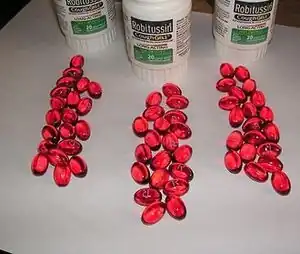
- High abuse in 12-25 year olds for euphoric and dissociative properties
- "Skittles", "Robotripping"
Clinical Features
- Diaphoresis, hyperthermia, tachycardia
- Visual field distortion and dilated pupils
- Excitement, euphoria, hallucinations, loss of time, feelings of dissociation, inappropriate laughing
- Less respiratory depression compared to other opioids (does not act on mu/delta receptors)
- Reactions with other medications
- If anti-H1 in combination, Anticholinergic toxicity
- If α-agonist in combination, hypertension and reflex bradycardia
- If Acetaminophen in combination, hepatic toxicity
- One of several medications that may precipitate Serotonin Syndrome
Toxicity is dose dependant[1]
- Normal dose of nyquil (30 mL) has 30mg of dextromethorphan
| Plateau | Dose | Symptoms |
|---|---|---|
| 1 | 100 to 200mg | Mild stimulation, change in gravity perception |
| 2 | 200 to 400mg | Euphoria and hallucinations |
| 3 | 300 to 600mg | Dissociative and out of body sensation |
| 4 | >600mg | Complete dissociation and unresponsiveness, coma |
Differential Diagnosis
Dissociative drugs
- NMDA receptor antagonist
Hallucinations
Serotonin-Like Agents
- Lysergic acid diethylamide (LSD)
- Psilocybin ("magic mushrooms")
- N,N-Dimethyltryptamine (DMT)
- 5-methoxy- dimethyltryptamine (5-MeO-DMT)
- 25C-NBOMe
Enactogens
- Designer amphetamines
- Bath salts
- Ecstasy (MDMA)
- Mescaline (peyote)
- Synthetic cannabinoids
Dissociative Agents
- Phencyclidine (PCP)
- Ketamine
- Dextromethorphan
- Nitrous oxide
Plant-based Hallucinogenics
- Marijuana
- Salvia
- Absinthe
- Isoxazole Mushrooms
- Hawaiian baby woodrose (Argyreia nervosa)
- Hawaiian woodrose (Merremia tuberosa)
- Morning glory (Ipomoea violacea)
- Olili- uqui (Rivea corymbosa)
Organic causes
- Delirium
- Intracranial mass to occipital or temporal lobes
- Encephalitis, limbic encephalitis, anti-NMDA receptor encephalitis
- Migraine
- Seizure
- Hypocalcemia/Hypercalcemia
- Rift valley fever
- Rabies
- Syphilis
- Vitamin B7 deficiency
- Pellagra
- Dementia
Other Toxicologic Causes
- Alcohol withdrawal
- Anticholinergic Toxicity
- Tricyclic (TCA) Toxicity
- Synthetic cannabinoids
- Inhalant abuse
- Nitrogen narcosis
- GHB withdrawal
- Hydrocarbon toxicity
- Heavy metal toxicity
- Multiple medications: montelukast, doxapram, hyoscyamine, tizanidine, peramivir, amantadine, rimantadine, bromocriptine, methylergonovine, benztropine, doxepin, voriconazole, acyclovir, valacyclovir, ganciclovir, cimetidine, penicillin G Procaine, clarithromycin, metoclopramide
- Inhalant abuse
Psychiatric Causes [2]
- Schizophrenia, schizoaffective disorder, schizophreniform disorder
- Depression with psychotic features
- Bipolar disorder
- Charles Bonnet Syndrome (in the visually impaired)
Evaluation
- Given altered mental status, key importance of witnesses and EMS recovery of medication bottles
- Acetaminophen level (combination cold medicine)
- Urine drug screen may be positive for PCP or opioids
Management
- Supportive care
- IV hydration
- Cooling
- Benzodiazepines
- Naloxone is unlikely to have much effect unless there is respiratory depression