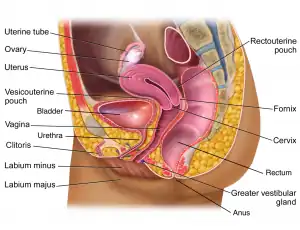
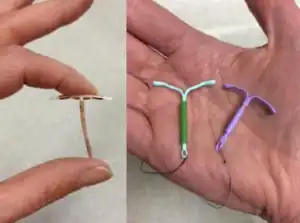
Pelvic anatomy including organs of the female reproductive system.Paragard, Mirena, and Skyla
Intrauterine devices (IUDs) are one of the most effective contraceptive methods
T-shaped device inserted through cervix, can be used for up to 3-12 years
Serious complications are rare, <1% of women with IUDs
Copper IUD (Paraguard):
lasts up to 12 years, no hormones, usually cheaper
tend to cause more side effects (heavy/irregular menses, pelvic pain)
also extremely effective as emergency contraception if inserted within 120 hours of unprotected sex
Hormonal IUDs (Mirena, Liletta, Mirena, Skyla, Kyleena): secrete small amount of progestin (levonorgestrel)
MIrena effective up to 6 years, the others for 3-5 years
Menses tend to get significantly lighter or disappear altogether after the first few months
Very little progestin absorbed systemically, so women tend NOT to have the hormonal side effects or increased DVT/PE risk associated with oral contraceptives[1]
Complications and Management
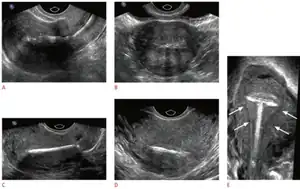
IUD on ultrasound
"Lost" IUD
Most common IUD-related reason for ED presentation
Small removal strings are left protruding from cervix on insertion
Women are instructed to feel for string with finger, if strings seem shorter or cannot be felt, may indicate malposition or complication
Management:
Attempt to visualize strings
If cannot, IUD position can be confirmed on ultrasound or (for copper IUDs) abdominal x-ray
If extrauterine, needs surgical removal
Uterine perforation
Extremely rare
Suspect in patient with IUD and symptoms of endometritis, salpingitis, and/or peritonitis
Diagnosed by imaging: IUD may be imbedded in uterine wall or free in peritoneum
Requires emergent Ob/gyn consult for surgical removal/repair
Pregnancy with IUD in place
Extremely rare, as IUDs are >99% effective in preventing pregnancy[2]
Increased risk of ectopic pregnancy if hCG positive and IUD still in place