Japanese encephalitis
Background
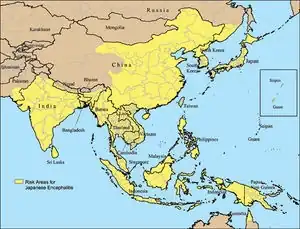
- Mosquito-borne flavivirus
- One of the most common causes of encephalitis globally
- Highly endemic in parts of Asia and the Western Pacific
- Up to 70,000 cases, 15,000 deaths annually
- Usually affects children in endemic areas, as most adults have been exposed and are immune
- Rare in tourists, as the vector Culex mosquito breeds primarily in rural rice paddies
Clinical Features
- 5-15 day incubation
- Sudden, high fever
- Headache
- Nuchal rigidity and other meningeal signs
- Seizure (especially in infants)
- Various pyramidal and extrapyramidal signs
Differential Diagnosis
- SAH
- Lyme disease
- Brain abscess
- Bacterial endocarditis
- Toxic / metabolic encephalopathy
<translate>
Altered mental status and fever
- Infectious
- Sepsis
- Meningitis
- Encephalitis
- Cerebral malaria
- Brain abscess
- Other
- Neuroleptic malignant syndrome
- Serotonin syndrome
- Malignant hyperthermia
- Sympathomimetic toxicity (cocaine, amphetamine, ketamine)
- Anticholinergic toxicity
- Heat stroke
- Delirium tremens
- Hypothalamic stroke
- Pheochromocytoma
- Thyroid storm
</translate>
Evaluation
- Usually diagnosed by clinical suspicion
- Lumbar puncture if any concern for HSV, VZV, or bacterial meningitis
- Can test CSF for Japanese encephalitis
Management
- Supportive
- IVF, electrolyte repletion, antipyretics
- Antiepileptics for seizures
- Depressed mental status may require intubation for airway protection
- Consider empiric acyclovir and antibiotics if HSV or bacterial causes not ruled out
Disposition
- Admit all but very mild illness
- Recovery can take months, some deficits may be permanent