Assess patients ability to speak and protect the airway before and frequently during transport
Hematomas can significantly distort pharyngeal and facial anatomy making intubation or cricothyroidotomy difficult
Increased jaw mobility from a mid face fracture may help with intubation
Penetrating trauma to the lower third of the face frequently requires intubation or a surgical airway[1]
Place a protective shield over an eye suspected to have a ruptured globe
Patients should remain upright or reverse trendelenburg if there is oropharyngeal and nasal bleeding to avoid aspiration especially if placed in cervical protection
Temporizing hemostasis with oral and nasal packing in an intubated patient may help with persistent bleeding
Transport all avulsed pieces of the face including ears and nose
Pediatric Considerations
Cricothyrotomy is contraindicated in patients <8yr old
Maxillary sinuses do not develop until 6 yr old (reduces midfacial fracture)
Pediatric orbital floor is more pliable, more likely to lead to entrapment
Mandible fracture requires prompt referral (1-2d) due to rapid bone remodeling
Clinical Features
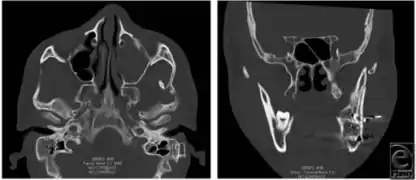
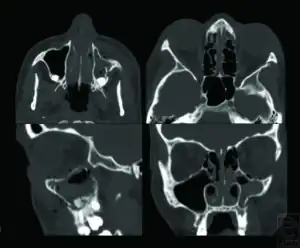
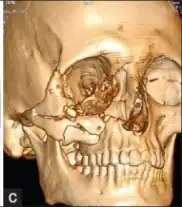
Patient with poly maxillofacial trauma: (a) Bilateral black eyes. (b) X-ray skull: AP view showing multiple fractures of facial bone including mandible. (c) X-ray skull: lateral view showing multiple fractures of facial bone including mandible. (d) CT scan showing details of facial bone fractures.
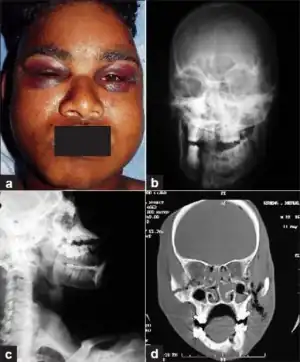
 Periorbital ecchymosis

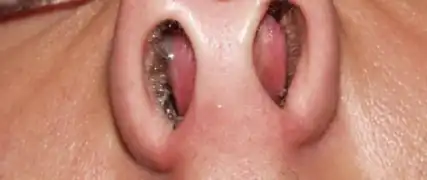
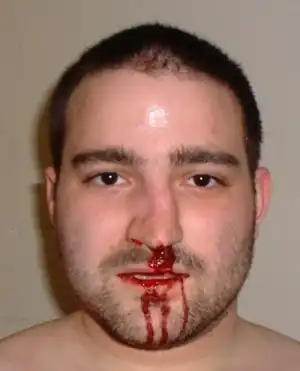
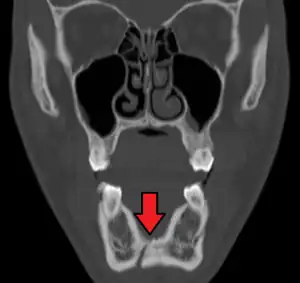
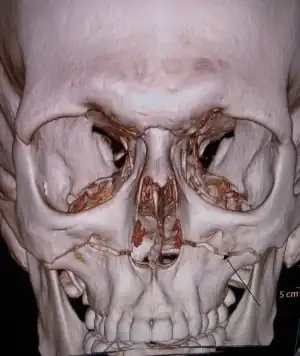 Le Fort type 1 fracture