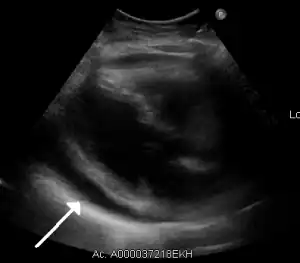
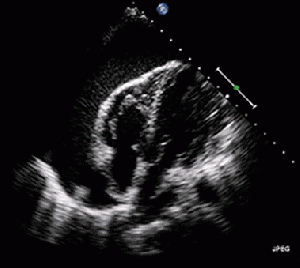
First view of FAST in penetrating injury should be pericardial
Pericardial fluid detection (Sn 100%, Sp 97%)
In acute cases, even a relatively small build up of pericardial fluid can lead to hemodynamic compromise
Differentiate pericardial effusion from pleural effusion using the parasternal long axis view. Pericardial effusions will have an anechoic stripe between the left atrium and descending thoracic aorta. In a pleural effusion, the stripe will be seen behind the descending thoracic aorta.[1]
CTA
Imaging study of choice for penetrating and blunt trauma