Pes anserine bursitis
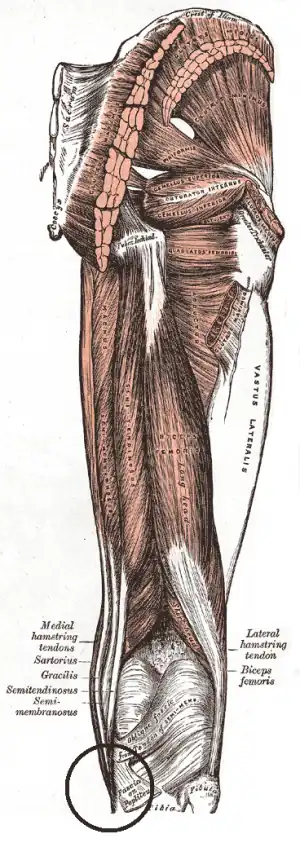
Background Muscles of the gluteal and posterior femoral regions. Area of pes anserinus (circled); sartorius, gracilis, semitendinosus and semimembranosus are labeled (bottom). Name comes from proximity to the pes anserine (three tendons that insert on the tibia)
Inflammatory condition of the medial knee Risk Factors Osteoarthritis of knee
Obese females
History of athletic activity (overuse)
Clinical Features Anterior medial knee pain, frequently chronic (insertion of pes anserine)
Worse with ascending stairs and when arising from a seated position
Focal swelling occasionally noted over the bursa
TTP over the bursa Differential Diagnosis Nontraumatic/Subacute Evaluation Consider knee x-rays to rule out fracture
Management RICE
NSAIDS Physical Therapy
Intrabursal injection with local anesthetics and/or corticosteroids (second line treatment)
3-5 mL of 1% lidocaine with or without methylprednisolone into point of maximal tenderness in bursa
Do not inject actual tendons themselves. Disposition Home
Admit for IV antibiotics if infected bursa is suspected
Follow up with primary care provider +/- Physical Therapy See Also References