Phytophotodermatitis
Background
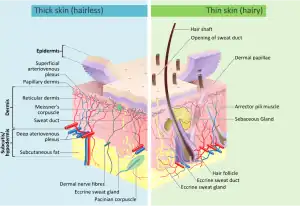
- The result of chemicals in certain foods reacting with sunlight to cause an aggrevated "sun-burn" like rash
Common Causative Agents[1]
- Celery
- Parsnip
- Fennel
- Lime
- Carrot
- Mustard
- Parley
- Dill
- Grapefruit
- Lemon
- Fig
- St. John's wort
Clinical Features[2]
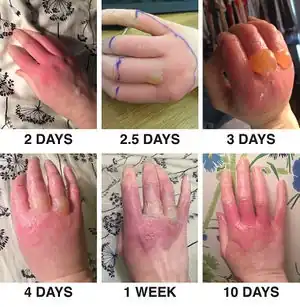
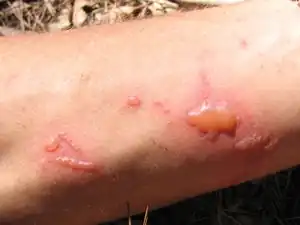
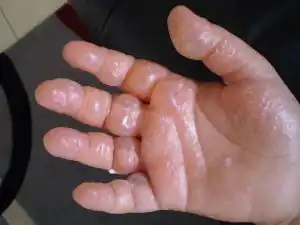
- Bizarre, linear streaking rash that can be painful or burning
- Bullae and vesicles
- Often in a "dripping" pattern or with hand-prints
- Acute phase 3-5 days, may then progress to hyperpigmentation for months
Differential Diagnosis
<translate>
Vesiculobullous rashes
Febrile
- Diffuse distribution
- Varicella (chickenpox)
- Smallpox
- Monkeypox
- Disseminated gonococcal disease
- DIC
- Purpural fulminans
- Localized distribution
- Necrotizing fasciitis
- Hand-foot-and-mouth disease
Afebrile
- Diffuse distribution
- Bullous pemphigoid
- Drug-Induced bullous disorders
- Pemphigus vulgaris
- Phytophotodermatitis
- Erythema multiforme major
- Bullous impetigo
- Localized distribution
- Contact dermatitis
- Herpes zoster (shingles)
- Dyshidrotic eczema
- Burn
- Dermatitis herpetiformis
- Erythema multiforme minor
- Poison Oak, Ivy, Sumac dermatitis
- Bullosis diabeticorum
- Bullous impetigo
- Folliculitis
</translate>
Evaluation
- Clinical diagnosis
Management
- Topical steroids (e.g. topical triamcinolone)[3]
Disposition
- Outpatient
See Also
External Links
References
- ↑ Raam et al. "Phytophotodermatitis: The other lime disease." Annals of EM. April 2016. 67(4):554-556
- ↑ Raam et al. "Phytophotodermatitis: The other lime disease." Annals of EM. April 2016. 67(4):554-556
- ↑ Raam et al. "Phytophotodermatitis: The other lime disease." Annals of EM. April 2016. 67(4):554-556