Placenta accreta
Background
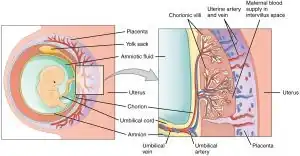
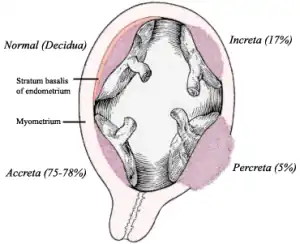
- Placenta accreta - superficial attachment to myometrium, uterus is possibly savable without hysterectomy
- Usually requires hysterectomy
- Placenta increta - invasion of myometrium
- Placenta percreta - penetrates myometrium, into serosa, possibly bladder
- Associated with Placental abruption
Risk factors
- Prior C-section
- Other uterine surgery
- Low lying placenta
- Placenta previa
- Grand multiparity
- Asherman syndrome
Clinical Features[1]
- Postpartum hemorrhage, often severe, is major risk
- Typically causes no symptoms during pregnancy
- May cause vaginal bleeding in 3rd trimester
- May cause preterm labor
- Placenta may not deliver within 30 min of delivery
- Attempts at manual separation fail due to no natural plane of separation or may cause massive bleeding
Differential Diagnosis
<translate>
Abdominal Pain in Pregnancy
The same abdominal pain differential as non-pregnant patients, plus:
<20 Weeks
- Ectopic pregnancy
- First trimester abortion
- Complete abortion
- Threatened abortion
- Inevitable abortion
- Incomplete abortion
- Missed abortion
- Septic abortion
- Round ligament stretching
- Incarcerated uterus
- Malposition of the uterus
>20 Weeks
- Labor/Preterm labor
- Placental abruption
- Placenta previa
- Vasa previa
- Uterine rupture
- Vaginal trauma
- HELLP syndrome
- Cholestasis of pregnancy
- Chorioamnionitis
- Incarcerated uterus
- Acute fatty liver of pregnancy
- Malposition of the uterus
- Placenta accreta
- Placenta increta
- Placenta percreta
Any time
- Hemorrhagic ovarian cyst
- Fibroid degeneration or torsion
- Ovarian torsion
- Constipation
</translate>
Evaluation
- Pelvic ultrasound
- CBC, T&S
Management
- Consult Ob/gyn, particularly if significant bleeding
- Resuscitate
Disposition
- Admit