Serum sickness
Background
 Typical appearance of serum sickness rash
- A type III hypersensitivity reaction (secondary to injection of anitoxins e.g. tetanus, rabies)
- Reactions secondary to the administration of nonprotein drugs (e.g. Amoxicillin, cefaclor, cephalexin (Keflex), trimethoprim-sulfamethoxazole)
- Primary occurs 6-21 days after initial exposure
- 1-4 days after subsequent exposures to the same antigen
- Symptoms usually last 1-2 weeks before spontaneously subsiding
- Long-lasting sequelae generally do not occur
- Fatalities are rare and usually are due to continued administration of the antigen
Clinical Features
Differential Diagnosis
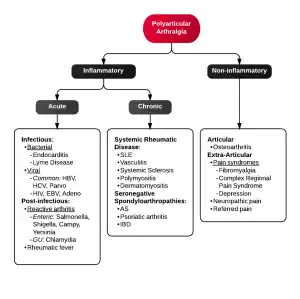 Algorithm for Polyarticular arthralgia
Evaluation
- Clinical diagnosis in which labs may be suggestive but not required[1]
- Careful investigation of new medications
- List of serum sickness medications
- Mild leukopenia or leukocytosis
- ESR elevation
- Mild proteinuria
- Mild hematuria
- Mild serum creatinine elevation
- Decreased C3, C4
- Other labs to obtain:
- CH50
- LFTs
- Urine electrolytes (Na, K, Cr, eosinophils)
- ESR and CRP
- Viral hepatitis panel, HIV, RPR/VDRL
Management
Disposition
- Admit for:
- Significant comorbidities (advanced or very young age, immunocompromised)
- Severe symptoms
- Hemodynamic instability/hypotension
- Unclear diagnosis
External Links
See Also
References