Sheehan's syndrome
Background
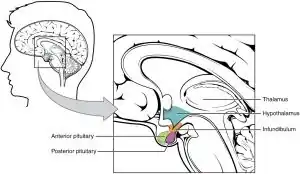
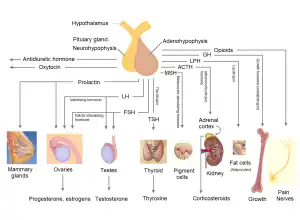
- Also known as postpartum hypopituitarism
- Caused by pituitary hypoperfusion and infarction usually in the setting of postpartum hemorrhage
- During pregnancy there is enlargement of the pituitary gland predisposing it to ischemia in low-flow states
Clinical Features
- Symptoms consistent with adrenal insufficiency, hypothyroidism and hypogonadism
- Inability to lactate
- Amenorrhea or oligomenorrhea
- Fatigue
- Cold intolerance
- Lethargy
- Weight loss
- Can occur any time from the immediate postpartum period to years after birth
Differential Diagnosis
<translate>
Adrenal crisis
- Addison's disease
- Congenital adrenal hyperplasia
- Shock
- Sepsis
- Pituitary apoplexy
- Sheehan's syndrome
</translate>
Evaluation
- Evaluation of serum prolactin levels is not performed as it is difficult to differentiate low from normal serum prolactin levels
Workup
- Workup should include testing of all anterior pituitary hormones
- Patients should be evaluated and treated for adrenal insufficiency immediately as this can worsen pre-existing hypotension
- Other pituitary hormones can be tested for 4-6 weeks after the initial insult
Diagnosis
Management
- Currently no treatment is available but there is an ongoing small open-label pilot study looking at using recombinant human prolactin