Sore throat
Background
- Sore throat is one of the most common chief complaints in the ED and primary care
- Most cases are viral and self-limited
- The primary ED goals are to identify dangerous causes (peritonsillar abscess, retropharyngeal abscess, epiglottitis, Ludwig's angina) and appropriately test/treat for Group A Strep
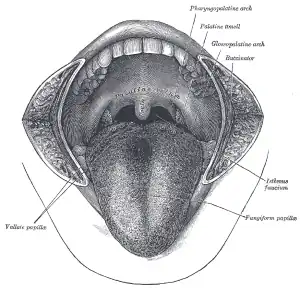
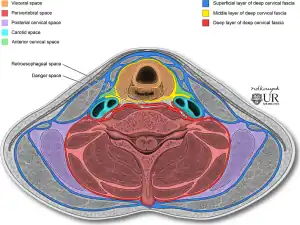
Clinical Features
- Key history: onset, severity, dysphagia, drooling, voice change ("hot potato voice"), trismus, neck stiffness/swelling, fever, rash
- Red flags suggesting dangerous cause:
- Inability to swallow secretions/drooling
- Trismus (inability to open mouth)
- Stridor or respiratory distress
- Unilateral swelling or uvular deviation
- Toxic appearance
- Neck swelling (especially floor of mouth)
- Physical exam:
- Pharyngeal erythema, exudates, tonsillar enlargement
- Uvular deviation → peritonsillar abscess
- Floor of mouth swelling → Ludwig's angina
- Cervical lymphadenopathy
- Assess for trismus, drooling, and airway compromise
Differential Diagnosis
<translate>
Acute Sore Throat
Bacterial infections
- Streptococcal pharyngitis (Strep Throat)
- Neisseria gonorrhoeae
- Diphtheria (C. diptheriae)
- Bacterial Tracheitis
Viral infections
- Infectious mononucleosis (EBV)
- Patients with peritonsillar abscess have a 20% incidence of mononucleosis [1]
- Laryngitis
- Acute Bronchitis
- Rhinovirus
- Coronavirus
- Adenovirus
- Herpesvirus
- Influenza virus
- Coxsackie virus
- Herpangina
- Hand-foot-and-mouth disease
- HIV (Acute Retroviral Syndrome)
Noninfectious
- Stevens-Johnson Syndrome
- Pemphigus
- Angioedema
Other
- Deep neck space infection
- Retropharyngeal abscess
- Ludwig's angina
- Parapharyngeal space infection
- Peritonsillar Abscess (PTA)
- Epiglottitis
- Kawasaki disease
- Penetrating injury
- Caustic ingestion
- Lemierre's syndrome
- Peritonsillar cellulitis
- Lymphoma
- Internal carotid artery aneurysm
- Oral Thrush
- Parotitis
- Post-tonsillectomy hemorrhage
- Vincent's angina
- Acute necrotizing ulcerative gingivitis
</translate>
Chronic Sore Throat
- GERD
- Obstructive sleep apnea
- Fungal infections (e.g., candida)
- Chronic sinusitis with post-nasal drip
- Inhalation of irritants (smoke, chlorine gas)
- Glossopharyngeal neuralgia
- Tumor (tongue, larynx, thyroid)
- Thyroiditis
- Retained foreign body
Evaluation
- Centor criteria (modified/McIsaac) to guide Group A Strep testing:[2]
- Tonsillar exudates (+1)
- Tender anterior cervical lymphadenopathy (+1)
- Fever >38°C / 100.4°F (+1)
- Absence of cough (+1)
- Age 3-14 (+1), Age 15-44 (0), Age ≥45 (-1)
- Score ≤1: No testing needed; unlikely GAS
- Score 2-3: Rapid strep test; treat if positive
- Score ≥4: Rapid strep test (or empiric treatment); treat if positive
- CT neck with IV contrast if deep space infection suspected (peritonsillar abscess, retropharyngeal abscess, Ludwig's angina)
- Consider monospot or EBV testing if infectious mononucleosis suspected (especially adolescents/young adults with prolonged symptoms, significant lymphadenopathy, hepatosplenomegaly)
- Lateral soft tissue neck X-ray — if epiglottitis or retropharyngeal abscess suspected (prevertebral soft tissue widening)
- Flexible nasopharyngoscopy if airway concern or supraglottic pathology suspected
Management
- Most sore throats are viral → supportive care:
- NSAIDs and/or acetaminophen for pain
- Encourage PO fluids
- Warm salt water gargles, throat lozenges
- Group A Strep pharyngitis:
- Penicillin V or amoxicillin x 10 days (first line)
- Azithromycin if penicillin allergic
- See Streptococcal pharyngitis
- Peritonsillar abscess:
- Needle aspiration or incision and drainage
- Antibiotics (see PTA)
- Epiglottitis:
- Emergent airway management, avoid agitating patient
- IV antibiotics (see Epiglottitis)
- Ludwig's angina:
- Emergent airway management
- IV antibiotics, surgical consultation
- Dexamethasone single dose (10 mg IV or 0.6 mg/kg PO) may reduce pain in moderate-severe pharyngitis[3]
Disposition
- Admit:
- Peritonsillar abscess (if unable to tolerate PO after drainage, or bilateral/complicated)
- Retropharyngeal abscess
- Epiglottitis
- Ludwig's angina
- Airway compromise
- Severe dehydration
- Discharge with follow-up:
- Viral pharyngitis
- Strep pharyngitis with appropriate antibiotics
- Successfully drained PTA with ability to tolerate PO
- Return precautions: difficulty breathing, inability to swallow, worsening symptoms
See Also
- Pharyngitis
- Streptococcal pharyngitis
- Peritonsillar abscess
- Retropharyngeal abscess
- Epiglottitis
- Ludwig's angina
- Infectious mononucleosis
- Uvulitis
- Neck mass
External Links
References
- ↑ Melio, Frantz, and Laurel Berge. “Upper Respiratory Tract Infection.” In Rosen’s Emergency Medicine., 8th ed. Vol. 1, n.d.
- ↑ McIsaac WJ, et al. A clinical score to reduce unnecessary antibiotic use in patients with sore throat. CMAJ. 1998;158(1):75-83.
- ↑ Hayward G, et al. Corticosteroids for the common cold. Cochrane Database Syst Rev. 2015;(10):CD008116.