Sulfonylurea toxicity
Background Sulfonylureas are a commonly prescribed oral diabetes medication, and include glyburide , glimepiride, glipizide chlorpropamide, tolazamide
Inhibit potassium efflux from pancreatic beta cells→ increased insulin release Clinical Features Hypoglycemia
Can occur at therapeutic doses in renally impaired patients
Hypoglycemia often prolonged and severe
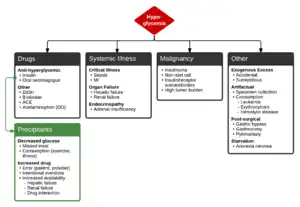
Onset within 8 hours of ingestion Pediatrics : one pill can kill!!Differential Diagnosis Differential diagnosis of hypoglycemia Drugs Systemic Illness Malignancy Insulinoma
Non-islet cell
Insulin/receptor autoantibodies
High tumor burden Other Artifactual
Specimen collection
Consumption
Post-surgical
Starvation
Precipitants of anti-hyperglycemic induced hypoglycemia Decreased glucose
Missed meal
Consumption (exercise, illness)
Increased drug
Error (patient, provider)
Intentional overdose
Increased availability
Evaluation Hypoglycemia + known or suspected ingestionBMP, creatinine, decrease in renal clearance may have led to toxicity
Serial POC glucose measurements
Routine ingestion labs if suspect intentional OD
Management Administer activated charcoal, preferably within 1 hr of ingestion
Multiple doses may be beneficial, especially for glipizide Glucose Treatment Initial therapy regardless of known cause Adults
50mL D50W bolus
Start a D10 1/2NS drip (100mL/hr) Children
1mL/kg of D50W OR
2mL/kg D25W OR 5-10mL/kg D10W
Neonate: 5-10 mL/kg D10W Theoretical benefit to reduce risk of recurrent hypoglycemia
Hyperpolarization of the beta cell results in inhibition of Ca influx and prevents insulin release
50-100 mcg subcutaneous in adults with repeat dosing Q6hrs
2 mcg/kg (max 150mcg) subcutaneously Q6hrs should be used in children
Continuous infusion of 50-125 mcg/hr is an alternative in adults
Administer octreotide for 24 hours, then after discontinuing, monitor for hypoglycemia for another 24 hours Special Considerations Glucagon 5mg IM may be used as temporizing measure, e.g. while obtaining IV access
Dependent on glycogen stores which may be depleted in prolonged hypoglycemia
Also short duration of action
Caution in using glucagon drip
Glucagon also has an insulin-releasing effectMay subsequently cause initial paradoxical hypoglycemia Disposition Admit
Because of prolonged effect, not appropriate to discharge from ED even with normal glucose and patient tolerating PO, as hypoglycaemia may recur over 24h or more See Also External Links References
↑ Rowden AK, Fasano CJ. Emergency management of oral hypoglycemic drug toxicity. Emerg Med
Clin N Am 2007; 25:347-356
↑ Howland MA. Antidotes in Depth: Octreotide. In: Flomenbaum NE, Goldfrank LR, Hoffman RS et al,
eds: Goldfrank’s Toxicologic Emergencies. New York NY, 2006;770-773
↑ Tran D et al. Oral Hypoglycemic Agent Toxicity Treatment & Management. Jul 14, 2015. http://emedicine.medscape.com/article/1010629-treatment#showall .
↑ Fasano CJ et al. Comparison of Octreotide and standard therapy versus standard therapy alone for the treatment of sulfonylurea-induced hypoglycemia. Ann Emerg Med 2008; 51:400-406