Tarantula spider bite
Background
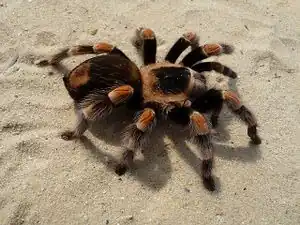
- Abdominal hairs may be flicked a short distance when threatened
- Rarely penetrate human skin but can embed deeply into conjunctiva and cornea
- Family: Theraphosidae
Clinical Features
- Local pain and irritation
- Bites can be painful but systemic symptoms other than fever are unusual
Differential Diagnosis
<translate>
Envenomations, bites and stings
- Hymenoptera stings (bees, wasps, ants)
- Mammalian bites
- Closed fist infection (Fight bite)
- Dog bite
- Marine toxins and envenomations
- Toxins (ciguatera, neurotoxic shellfish poisoning, paralytic shellfish poisoning, scombroid, tetrodotoxin
- Stingers (stingray injury)
- Venomous fish (catfish, zebrafish, scorpion fish, stonefish, cone shells, lionfish, sea urchins)
- Nematocysts (coral reef, fire coral, box jellyfish, sea wasp, portuguese man-of-war, sea anemones)
- Phylum porifera (sponges)
- Bites (alligator/crocodile, octopus, shark)
- Scorpion envenomation
- Reptile envenomation
- Snake bites
- Crotaline (Pit Vipers)
- Elapidae (Coral Snakes)
- Lizard bites
- Snake bites
- Spider bites
- Black widow
- Brown recluse
- Tarantula
- Funnel-web spider bite
- Armed spider bite
</translate>
Evaluation
- Usually clinical
- Red eye and pain after handling a tarantula necessitates an ocular exam
- Hairs may be difficult to detect on slit lamp
Management
- If suspicion for hairs embedded in cornea/conjunctiva, obtain ophtho consult as treatment may require surgical removal
- Embedded cutaneous hairs that are barbed may be removed with duct tape or cellophane tape followed by irrigation with sodium chloride.
- Urticarial reactions can be treated with oral antihistamines and/or topical/systemic corticosteroids.
Disposition
- Generally discharge