Acute fatty liver of pregnancy
Background
- Rare, potentially fatal complication that presents in second half of pregnancy or (less commonly) early postpartum
- Exact etiology unclear, but thought to involve abnormal fetal fatty acid metabolism
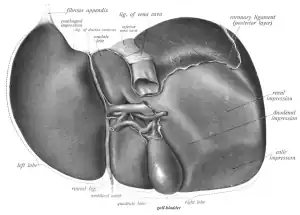
- Fat vesicles accumulate within hepatocytes, interfering with liver function
Clinical Features
- Usually presents in 3rd trimester, but may occur any time in 2nd half of pregnancy to early postpartum
- Nausea/vomiting (commonly severe)
- Jaundice
- Findings consistent with preeclampsia in some women:
- Hypertension
- Edema
- Proteinuria
- Hypoglycemia
- Often, signs/symptoms of DIC
- +/- encephalopathy, ascites
Differential Diagnosis
3rd Trimester/Postpartum Emergencies
- Acute fatty liver of pregnancy
- Amniotic fluid embolus
- Chorioamnionitis
- Eclampsia
- HELLP syndrome
- Mastitis
- Peripartum cardiomyopathy
- Postpartum endometritis (postpartum PID)
- Postpartum headache
- Postpartum hemorrhage
- Preeclampsia
- Resuscitative hysterotomy
- Retained products of conception
- Septic abortion
- Uterine rupture
Jaundice
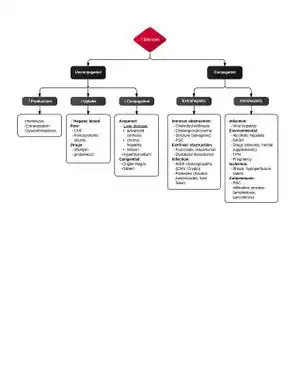
Indirect Hyperbilirubinemia
- Hemolytic
- G6PD
- Drug related
- Autoimmune hemolytic anemia
- Hematoma resorption
- Ineffective erythropoiesis
- Gilbert's
Direct (Conjugated) Hyperbilirubinemia
- Choledocholithiasis
- Cholecystitis
- Ascending cholangitis
- AIDS cholangiopathy
- Stricture
- Neoplasm
- Pancreatic head
- Gallbladder
- Primary liver (e.g. hepatocellular carcinoma)
- Metastatic
- Obstructing AAA
Hepatocellular damage
Patient will have severely elevated AST/ALT with often normal Alkaline Phosphatase
- Viral hepatitis
- Fulminant hepatic failure
- alcoholic hepatitis
- Ischemic hepatitis
- Toxins
- Isoniazid
- Phenytoin
- acetaminophen
- Ritonavir
- Halothane
- Sulfonamide
- Autoimmune hepatitis
- Primary biliary cirrhosis
- HELLP Syndrome
- Congestive Hepatopathy
Pregnancy Related
Transplant Related
Pediatric Related
- Inborn error of metabolism
- Neonatal jaundice (physiologic)
Additional Differential Diagnosis
- Reye syndrome
- TPN
- Heatstroke
- Budd-Chiari (with acute ascites)
- Wilson's disease
- Sarcoidosis
- Amyloidosis
Masqueraders
Only bilirubin stains the sclera
- Carotenemia
- Quinacrine ingestion
- Dinitrophenol, teryl (explosive chemicals)
Evaluation
Workup
- LFTs
- ALT/AST usually in 300-500 range, alk phos usually elevated in pregnancy
- Hyperbilirubinemia- more pronounced than in preeclampsia
- BMP
- Hypoglycemia
- DIC labs
- Low fibrinogen, coagulopathy
- DIC present in as many as 70% of patients[1]
- CBC
- Often shows leukocytosis
- UA
- Proteinuria
- RUQ US
- Non-specific; the liver can even be normal in echotexture
- Useful to rule out other causes of obstructive biliary tract pathology.
Diagnosis
- Often initially misdiagnosed as preeclampsia/HELLP
- Hypoglycemia, jaundice, ascites, hypofibrinogenemia all more common in AFLP
Swansea criteria<
At least six of the following findings, in the absence of another cause:[2]
- Vomiting
- Abdominal pain
- Polydipsia/polyuria
- Encephalopathy
- Elevated bilirubin
- Hypoglycemia
- Elevated urea
- Leukocytosis
- Ascites or bright liver on ultrasound scan
- Elevated transaminases (AAT or ALT)
- Elevated ammonia
- Renal impairment: elevated creatinine
- Coagulopathy: elevated prothrombin time or PT
- Microvesicular steatosis on liver biopsy
Management
- Emergent Ob/Gyn consult
- Delivery typically results in rapid hepatic recovery
- Dextrose for hypoglycemia
- FFP, cryoprecipitate, and/or platelets for coagulopathy (see DIC)
Disposition
- Admit ICU or transfer to center with Ob