Bariatric surgery complications
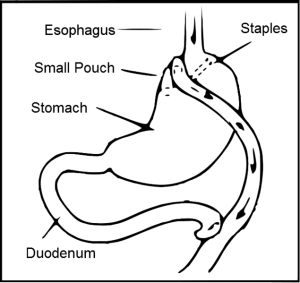
Background Roux-en-Y - malabsorptive and restrictive physiology;
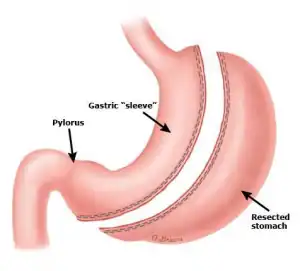
Gastric Sleeve - restrictive
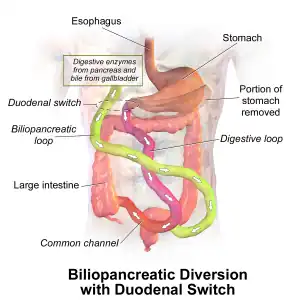
Biliopancreatic diversion
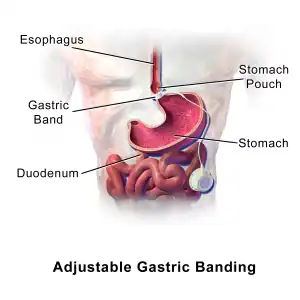
Vertical banded gastroplasty - now historical as replaced by LAP band;
Lap Band Complications Roux-en-y Gastric sleeve Biliopancreatic diversion Lap band Clinical Features Differential Diagnosis Early VTE , pneumonia , UTI , small bowel obstruction , etcRoux-Limb Obstruction
Anastomotic Leak
Abdominal exam often non-acute due to habitus
Intra-abdominal bleeding
May bleed into GI tract and only visualized on endoscopy Late Upper GI bleed
Resuscitate in standard fashion
Emergent endoscopy
Often bleed from staple lines, ulcers Anastomotic Leak or Stricture
Progressive inability to tolerate PO
Abdominal pain Solids first then liquids
Needs UGI then likely endoscopy
Marginal Ulcer
Internal hernia
Obstructive or nonobstructiveCrampy, intermittent abdominal pain radiating to back
Can have normal abdominal exam
May strangulate herniated bowel
Work up with CT Abdomen/pelvis and UGI
CT findings: swirl sign, intussuscepted bowel
Needs surgery early
Nutritional Complications
Evaluation CT AP - use PO & IV contrast
patients often cannot tolerate full 1L of PO contrast
sip as much contrast as possible in 3hrs then CT
weight limit of CT scanner often exceeded
can use Gastrografin UGI series instead
UGI series
beware GI pouch limits on contrast volume
useful for perforation, internal hernia, stricture, leak Specific Surgeries Roux-en-Y gastric bypass Creation of a small gastric pouch and an anastomosis to the jejunum
Gastric remnant distention[ 1] Remnant is a blind pouch that may become distended with paralytic ileus
Potential rupture → severe peritonitis
3.9% leak rate for RYGB; overall mortality 0.6%
Jejunojejunostomy leak associated with 40% mortality
Signs/symptoms: pain, hiccups , LUQ tympany, shoulder pain, abdominal distention
Diagnosis: XR shows large gastric air bubble vs CT
Treatment: emergent operative decompression with percutaneous drainage
Stomal Stenosis
Occurs in 6-20% of RYGB patients
Possibly related to tissue ischemia or tension on GJ anastomosis
Presentation several weeks after surgery
Signs/symptoms: nausea/vomiting , dysphagia , GERD , inability to tolerate PO
Diagnose with endoscopy vs UGI series vs CT
Marginal Ulcers
Occur in 0.6-16% of RYGB patients
Acid injury to jejunum
Causes: poor perfusion 2/2 tension/ischemia, increase gastric acid exposure, NSAID use, H pylori infection
Signs/symptoms: Nausea, pain, bleeding +/- perforation
Diagnose with endoscopy
Patients typically medically managed
Cholelithiasis
38% of RYGB patients
Risk reduced to 2% if ursodiol given as post-op ppx
Some surgeons perform prophylactic cholecystectomy with RYB procedure
Rapid weight loss increases lithogenicity of bile
Diagnosis: U/S or MRCP Hernias
Ventral hernias (0-1.8% in lap RYGB)
Internal hernias (0-5%)
Intermittent and may be difficult to detect via CT
Suspected may require urgent surgical exploration lest patient has strangulated pathology Dumping Syndrome
Occur in up to 50% of patients when high levels of carbohydrates are ingested
Early dumping syndrome
Occurs when pylorus is either removed or bypassed, allowing hyperosmolar stomach chyme to "dump" into the small intestine.
Hyperosmolality of food → fluid shifts into GI lumen → colicky and abdominal pain , diarrhea , nausea , tachycardia , diaphoresis, dizziness , syncope .
Treatment: Diet modification to avoid high simple sugars
Late dumping syndrome
Gastric Banding Placement of restrictive ring over the gastric cardia near the GE junction
Lowest mortality rate among all bariatric surgeries (0.05% mortality)
Stomal Obstruction
Early complication; occurs in 14% go GB patients
Typically due to inclusion over excess perigastric fat vs tissue edema vs inappropriate sized band
Signs/symptoms: nausea/vomiting inability to tolerate PO
Diagnosis: UGI series vs CT
If due to edema, may be treated with NG tube decompression until swelling improves
May require surgical revision if above unsuccessful
Port infection
0.3-9% of GB patients
associated with band erosion
treatment: Replacement of port if isolated infection vs band if more extensive
Band Erosion
Up to 7% of GB patients
Erodes through gastric wall secondary to wall ischemia vs mechanical stress from band
Occurs on average 22 months after surgery
signs/symptoms: evidence of infection, failure to lose weight, nausea/vomiting , epigastric pain and hematemesis
Diagnosis: Endoscopy vs CT
Treatment: Band removal
Band Slippage/gastric prolapse
2-14% of patients
Either anterior or posterior prolapse
Signs/Symptoms: Food intolerance, epigastric pain , acid reflux
Diagnosis: Upper GI series vs CT
Treatment: Emergent surgery
Esophageal dilatation
Up to 10% of patients
associated with over-inflated bands or excessive food intake
Signs/symptoms: Food/saliva intolerance, reflux, epigastric pain
Diagnosis: UGI series vs CT
Treatment: Fluid removal from band initially and behavioral modifications
Hiatus hernia
Results in refractory reflux Sleeve gastrectomy Creates sleeve out of the stomach and removes portion of greater curvature of stomach
Complication rate 3-24%; mortality 0.39%
Bleeding
Typically occur from the staple line
Stenosis
Can lead to gastric outlet obstruction
Signs/symptoms: Dysphagia , vomiting , dehydration , inability to tolerate PO
Dx: UGI series vs CT
treatment: Endoscopic dilatation vs surgical intervention depending on involvement
Gastric leaks
Up to 5.3% of patients; most serious complication associated with sleeve gastrectomy
2/2 poor healing in setting of inadequate blood supply vs weakness at staple line vs gastric-wall heat ischemia from cautery
Treatment: surgical repair vs percutaneous drainage/antibiotic/NPO
Reflux
Common post-op complication
Treated medically initially with eventual RYGB for refractory cases See Also External Links References Tack, Jan, et al. “Complications of bariatric surgery: Dumping syndrome, reflux and vitamin deficiencies.” Best practice and research clinical gastroenterology; 28; 2014; pages 741-749.
↑ Lee S, Carmody B, Wolfe L, Demaria E, Kellum JM, Sugerman H, Maher JW. Effect of location and speed of diagnosis on anastomotic leak outcomes in 3828 gastric bypass cases. J Gastrointest Surg. 2007;11(6):708.