Chilblains
Background Also known as perniones (sing. pernio), chill burns, and perniosis
Mild but uncomfortable inflammatory lesions of skin
Caused by long-term intermittent exposure to damp, nonfreezing ambient temperatures
Symptoms precipitated by acute exposure to cold
Primarily a disease of women and children
Associated with lupus , antiphospholipid antibodies, and Raynaud phenomenon
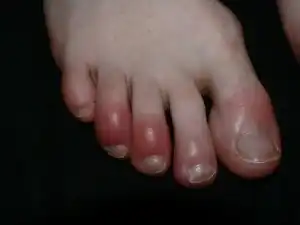
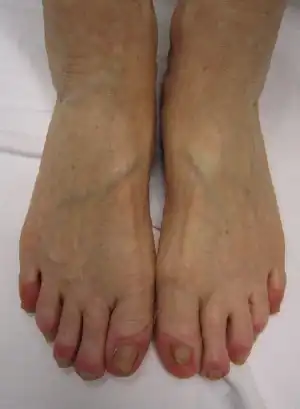
Rare in U.S.; common in United Kingdom Clinical Features Example 1 Example 2 Hands, ears, lower legs, feet most commonly affected
Symptoms
Tingling , numbness , pruritus , burning paresthesiasCutaneous manifestations appear up to 12hr after acute exposure
Localized edema, erythema, cyanosis, plaques, nodules
May progress in rare cases to ulcerations, vesicles, and bullae Rewarming may result in formation of tender blue nodules which may persist for days Differential Diagnosis Generalized
Freezing
Non-freezing
Evaluation Treatment[ 1] Affected skin should be rewarmed, gently bandaged, and elevated
Prophylactic and therapeutic treatment options:
Topical corticosteroids and oral steroids burst have been shown to be usefulDisposition Discharge if no frostbite or other serious pathology See Also References
↑ Ikaheimo T. Frostbite and Other Localized Cold Injuries. In: Tintinalli's Emergency Medicine: A comprehensive study guide. 7th ed. McGraw Hill Medical; 2011: 1331