Dermatitis herpetiformis
Background
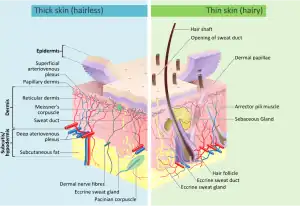
- Autoimmune blistering skin disorder strongly associated with celiac disease (gluten sensitivity)
- IgA deposits at dermal papillae cause neutrophilic inflammation
- Nearly all patients (>90%) have underlying celiac disease on intestinal biopsy, though most are asymptomatic from GI perspective
- Peak age: 30-40 years; male predominance
Dermatitis Types
- Atopic dermatitis
- Candida dermatitis
- Cercarial dermatitis
- Contact dermatitis
- Dermatitis herpetiformis
- Diaper dermatitis
- Dyshidrotic dermatitis
- Neonatal seborrhoeic dermatitis
- Nummular dermatitis
- Perianal streptococcal dermatitis
- Perioral dermatitis
- Seborrheic dermatitis
- Stasis dermatitis
Clinical Features
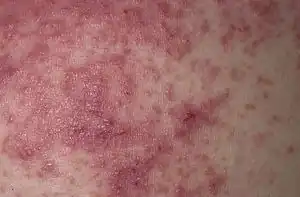
- Intensely pruritic papulovesicular eruption in symmetric distribution
- Characteristic locations: elbows, knees, shoulders, buttocks, sacrum, scalp
- Grouped vesicles on erythematous base (herpetiform pattern — hence the name, though unrelated to herpes)
- Excoriations often predominate (patients scratch off the vesicles)
- Resembles scabies but distribution is more extensor surfaces
Differential Diagnosis
- Scabies
- Linear IgA bullous dermatosis
- HSV
- Contact dermatitis
<translate>
Vesiculobullous rashes
Febrile
- Diffuse distribution
- Varicella (chickenpox)
- Smallpox
- Monkeypox
- Disseminated gonococcal disease
- DIC
- Purpural fulminans
- Localized distribution
- Necrotizing fasciitis
- Hand-foot-and-mouth disease
Afebrile
- Diffuse distribution
- Bullous pemphigoid
- Drug-Induced bullous disorders
- Pemphigus vulgaris
- Phytophotodermatitis
- Erythema multiforme major
- Bullous impetigo
- Localized distribution
- Contact dermatitis
- Herpes zoster (shingles)
- Dyshidrotic eczema
- Burn
- Dermatitis herpetiformis
- Erythema multiforme minor
- Poison Oak, Ivy, Sumac dermatitis
- Bullosis diabeticorum
- Bullous impetigo
- Folliculitis
</translate>
Evaluation
- Skin biopsy with direct immunofluorescence (gold standard): granular IgA deposits at dermal papillae
- Tissue transglutaminase (tTG) IgA — elevated in most patients
- Consider referral for intestinal biopsy to confirm celiac disease
Management
- Gluten-free diet — mainstay of long-term treatment (improves skin and GI disease)
- Dapsone — rapid relief of symptoms (often within 24-48 hours)
- Dapsone 50mg PO QD
- Check G6PD level before starting dapsone (risk of hemolytic anemia)
- Monitor CBC regularly on dapsone therapy
Disposition
- Discharge with dermatology referral
- Consider GI referral for celiac disease evaluation