Diaper dermatitis
Background
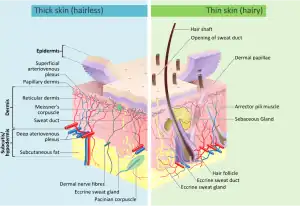 Normal dermal anatomy.
- Irritant contact dermatitis - the most common skin disorder in infants[1]
- Caused by presence of urine, feces, moisture, friction → breakdown of skin barrier
- Breast-feeding associated with lower rates of severe diaper dermatitis[1]
Clinical Features
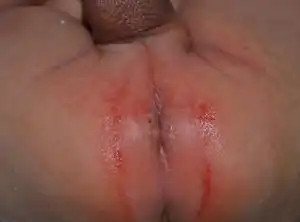 Contact diaper dermatitis
- Erythematous, macular and/or papular rash with well demarcated borders
- More severe disease will also have skin maceration and erosions
- Candidal rash will include scaling around margins
- Classic finding is "satellite lesions" in other locations
- Also examine for oral thrush
Differential Diagnosis
Evaluation
- Clinical diagnosis, based on history and physical examination
- If erosions or pustules → consider infectious work-up
Management
- Hygiene
- Air drying
- Cleansing regimen (gentle cleaning with water; avoid soap)
- Superabsorbent gel diapers
- Frequent changing
- Barrier creams (zinc oxide)
- Powders (but caution due to risk of aspiration)
- Topical corticosteroids (if resistant to hygiene measures)[1]
- Hydrocortisone 2.5% ointment BID over 2 weeks for mild cases
- Triamcinolone 0.025% ointment BID over 2 weeks for moderate to severe cases [2]
- Absorption increased due to moisture and diaper (Cushing syndrome has been reported with overuse)
- Topical sucralfate may also be used[3]
- Antifungal cream (if suspect candida dermatitis)[1]
- Nystatin cream 100,000 U/gram TID x10-14d (If using zinc oxide cream, apply after nystatin)
- Other options include: clotrimazole, ketoconazole, miconazole, oxiconazole, econazole, sertaconazole
- Miconazole 0.25% cream to affected area with each diaper change x 7 days
- Econazole 1% cream to affected area BID, continue for 3 days after resolution
- Antibacterial therapy (if suspect bacterial infection)[1]
Disposition
See Also
References