Distal interphalangeal dislocation (finger)
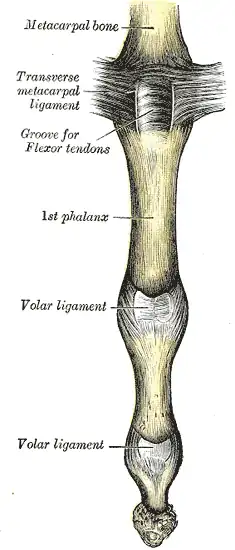
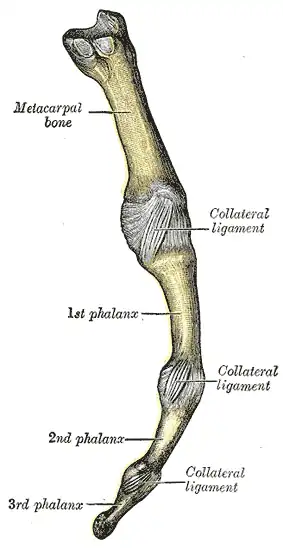
Background Distal interphalangeal dislocation (DIP), proximal interphalangeal dislocation (PIP), and metacarpophalangeal dislocation (MCP) joints of the finger shown. Volar/anterior finger anatomy. Lateral finger anatomy. Uncommon due to firm attachment of skin and subcutaneous tissue to underlying bone
Usually dorsal dislocation Volar = anterior = palmar
Dorsal = posterior Clinical Features Finger pain/deformity at DIP joint Differential Diagnosis Finger dislocations
Thumb dislocations
Hand dislocations
Evaluation Finger x-ray (PA and lateral)
True lateral of only the finger instead of hand will help detect subtle avulsion fractures [ 1] Management Dorsal/Posterior Flex wrist, then hyperextend the joint
Apply longitudinal traction followed by dorsal pressure to phalanx base
Irreducible dislocation likely due to entrapment of avulsion fracture, profundus tendor or volar plate
Without initial hyperextension, can be difficult to disengage from any trapped soft tissue
Post reduction, look for central slip rupture, which may lead to Boutonniere deformity Volar/Anterior Flex wrist then hyperflex the affected joint
Apply gentle traction then extend the joint
Often need open reduction due to volar plate entrapment Alumifoam splint on side of dislocation
10-20 degrees of flexion for dorsal dislocation, joint in extension for volar dislocation
Splint should not extend onto the palm Disposition If closed dislocation and successfully reduced → Discharge with hand surgery follow-up
If open or unable to be reduced in ED → hand surgery consult, likely admission See Also External Links References
↑ Horn A. Management of Common Dislocations. In: Roberts and Hedges' Clinical Procedures in Emergency Medicine. 6th ed. Philadelphia, PA: Elsevier; 2014.