Glomerulonephritis
Background
- Glomerulonephritis (GN) = inflammation of the glomeruli, characterized by hematuria, proteinuria, and often RBC casts
- Presents as nephritic syndrome: hematuria, hypertension, edema, oliguria, mild-moderate proteinuria, elevated creatinine
- Distinguished from nephrotic syndrome (massive proteinuria >3.5g/day, hypoalbuminemia, edema, hyperlipidemia)
- Most common cause in children: post-streptococcal GN (typically self-limited)
- In adults: IgA nephropathy is most common worldwide
Clinical Features
- Cola/tea-colored urine (glomerular hematuria)
- Periorbital or peripheral edema
- Hypertension (often the presenting finding)
- Oliguria
- Recent URI or skin infection 1-3 weeks prior (post-streptococcal)
- Rash + arthralgia (HSP/IgA vasculitis, SLE)
- Fever + bloody diarrhea → anemia + thrombocytopenia (consider hemolytic uremic syndrome)
- Hemoptysis + renal failure (pulmonary-renal syndrome: Goodpasture, granulomatosis with polyangiitis)
Differential Diagnosis
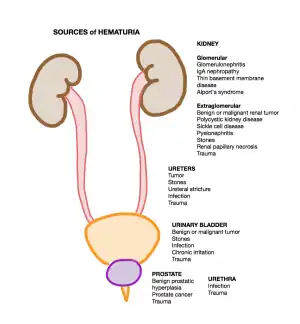 Sources of hematuria.
- Urologic (lower tract)
- Any location
- Ureter(s)
- Bladder
- Transitional cell carcinoma
- Vascular lesions or malformations
- Chemical or radiation cystitis
- Prostate
- Urethra
- Renal (upper tract)
- Hematologic
- Myoglobinuria - positive blood, no RBCs: rhabdomyolysis
- Hemoglobinuria - positive blood, no RBCs
- Miscellaneous
Evaluation
- Urinalysis: hematuria, proteinuria, RBC casts (pathognomonic for GN)
- BMP: creatinine, BUN, electrolytes (hyperkalemia from renal failure)
- CBC: anemia (HUS, chronic disease), thrombocytopenia (HUS/TTP, SLE)
- Albumin (reduced in nephrotic features)
- Complement levels: low C3 (post-strep GN, MPGN, lupus), low C3 + C4 (lupus)
- ASO titer, anti-DNase B (post-streptococcal)
- ANA, anti-dsDNA (lupus nephritis)
- ANCA (vasculitis)
- Anti-GBM antibodies (Goodpasture)
- Peripheral smear if HUS suspected (schistocytes)
- CXR if pulmonary-renal syndrome suspected
Management
- Hypertension control: most important acute intervention — risk of hypertensive encephalopathy/seizures
- Fluid/sodium restriction for edema and volume overload
- Diuretics (furosemide) for significant edema or pulmonary congestion
- Treat hyperkalemia if present
- Do not delay empiric treatment for rapidly progressive GN (RPGN) — high-dose IV corticosteroids while awaiting biopsy results
- Nephrology consultation for all suspected GN
- Specific therapy depends on etiology (immunosuppression, plasmapheresis for Goodpasture/ANCA, supportive care for post-strep)
Disposition
- Admit: significant renal impairment, severe hypertension, pulmonary edema, suspected RPGN, HUS
- Discharge: mild post-strep GN with controlled BP and stable renal function — close nephrology follow-up within 24-48 hours
- Return precautions: decreased urine output, swelling, headache, visual changes, blood in urine
See Also
References