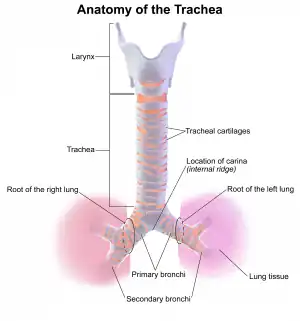
Cross section of a trachea and esophagus anatomy.Tracheal anatomy.
Common cause of inspiratory stridor in infants and children
Characterized by collapse of supraglottic tissue during inspiration
Differs from tracheomalacia in that this pathology involves soft tissue rather than tracheal cartilage
Etiology not well-known, possible mechanisms include redundant neck tissue, neurologic causes
Typically presents as early as 2 years of life, resolves by 2 years of age[1]
Clinical Features
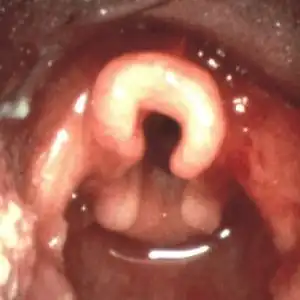
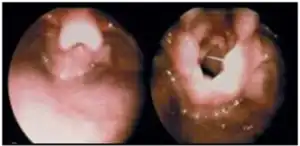
Omega shaped epiglottis, seen in laryngomalacia.Left, severe laryngomalacia with epiglottic collapse with inspiration; Right, tight aryepiglottic folds and redundant arytenoid mucosa with inspiration.