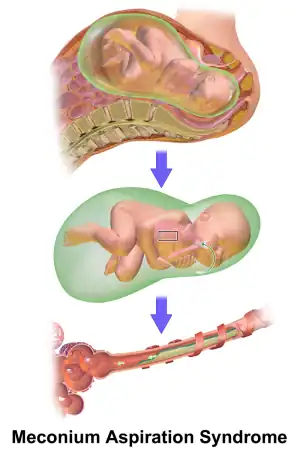
Background Image showing release of meconium into amniotic fluid (top), its progress into the mouth middle), and subsequently into the lung (C). Presentation ranges from mild respiratory distress to life-threatening respiratory failure
Incidence is 2-10% of infants born through MSAF (meconium-stained amniotic fluid)
Thought to be associated with fetal hypoxia and post-term delivery
Causes hypoxemia and acidosis via airway obstruction, chemical irritation/inflammation, infection, and surfactant inactivation
Associated with persistent pulmonary hypertension of the newborn (PPHN)
Age
Pulse^
Respiratory Rate
Systolic BP
Preterm < 1 kg
120-160
30-60
36-58
Preterm 1 kg
120-160
30-60
42-66
Preterm 2 kg
120-160
30-60
50-72
Newborn
126-160
30-60
60-70
Min of life
Target sat^^
1 min
60-65%
2 min
65-70%
3 min
70-75%
4 min
75-80%
5 min
80-85%
10 min
85-95%
^Fever directly causes an increase in heart rate of 10 beats per minute per degree centigrade[ 2]
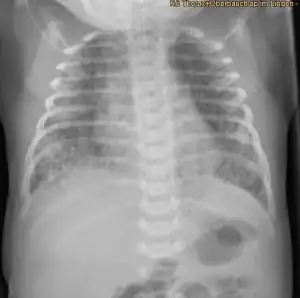
Clinical Features Differential Diagnosis Newborn Problems Evaluation Chest X-ray of neonate with meconium aspiration. Workup CXR
Streaky, linear densities
Hyperinflated lungs and flattened diaphragm
Diffuse patchy opacities (may appear similar to RDS if severe) ABG Echocardiography Blood and sputum cultures Diagnosis Clinical diagnosis based on the following:
Evidence of meconium on infant
Respiratory distress shortly after birth
Characteristic CXR findings
If intubation required, meconium visualized in trachea
Ways to differentiate between other causes of respiratory distress in a neonate:
Transient tachypnea of the newborn is more common in late preterm infants (34-37 weeks) and RDS in preterm infants, whereas MAS more common in postmature infants (>41 weeks)Delayed transition from fetal circulation symptoms improve more quickly than those of MAS
Congenital cyanotic heart disease is differentiated by physical exam (murmurs , hepatomegaly ), CXR (cardiac size/shape), and echocardiogram (cardiac anatomy and function) Management Supportive care: see newborn resuscitation
Adequate oxygenation and ventilation
Supplemental oxygen to keep saturation >99% and PaO2 55-90
Assisted ventilation with CPAP if FiO2 exceeds 0.4 to 0.5
High frequency oscillatory ventilation or ECMO for those who fail conventional mechanical ventilation
Goal PaCO2 50-55 mmHg
Maintain blood pressure and perfusion
Umbilical lines to monitor blood gases and BP
Correct metabolic abnormalities
Empiric antibiotics while awaiting culture results (because of difficulty differentiating between pneumonia initially)
Surfactant administration for severe disease requiring mechanical ventilation, FiO2>0.5, and mean airway pressure >10-12 Disposition Prevention Fetal heart rate monitoring intrapartum to reduce risk of fetal hypoxia
Induction of labor after 41 weeks gestation to reduce postmature delivery
Amnioinfusion with isotonic fluid to dilute thick meconium is NOT routinely recommended See Also External Links References