Chemical weapons
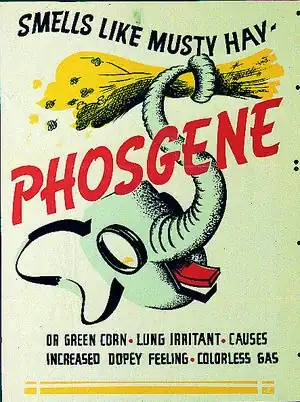
Background WWII Lewisite poster Dropping of white phosphorus bomb. Phosgene poster Hydrochloric acid A test tube filled with ammonium chloride smoke made by reacting ammonia with hydrochloric acid. Liquid pool chlorine Agent orange use in Vietnam.White phosphorus injuriesCan be released via unintended means such as a spill from a damaged railroad tank car or industrial explosion as well as by intentional means as chemical weapons. Pediatric considerations Higher metabolic rate and faster basal respiratory rate, causing more rapid and larger exposures
Skin is thinner and more permeable
Agents heavier than air have increased concentrations closer to the ground exposing children > adults AKA Hydrocyanic acid, Formonitrile, Prussic acid
Mimics carbon monoxide poisoning
Smell of bitter almonds but not all people can smell cyanide
Absorbed through skin, inhaled or ingested
Can affect individuals near fire with synthetic materials or plastics
Can penetrate rubber and barrier fabrics Pathophysiology Cyanide inhibits cytochrome oxidase on mitochondria
Cells unable to use oxygen in bloodstream
Cellular asphyxiation Symptoms Symptoms can be delayed up to 60 minutes
Symptoms dependent on concentration, form of cyanide, and route of exposure
CNS and cardiovascular system most susceptible
Initially hypertension and tachycardia progressing to bradycardia, hypotension, and arrhythmias late
Anxiety, dizziness, headache, apnea, seizures, and coma Management 100% oxygen and antidote therapy
Sodium nitrite (IV) or amyl nitrite (inhaled) to displace cyanide from cytochrome oxidase
Sodium thiosulfate: For conversion of cyanide to excretable thiosulfate
Repeat sodium nitrite and sodium thiosulfate in 30min at half initial dose if needed
Hydroxocobalamin (Vit B12a): makes CN water soluble and non-toxicCyanide Antidote Kit: Amyl nitrite pearls, sodium nitrite (IV), sodium thiosulfate (IV)
Cyanokit: Less toxic than cyanide antidote kit and shown effective in cardiac arrest Acetylcholinesterase inhibitors
Includes household and commercial pesticides (diazinon and parathion)
G-series (sarin, tabun, soman) and V-series (VX)
G-series are volatile non-persistent agents that evaporate quickly
V-series high viscosity with oily consistency
Rapidly absorbed through skin, symptoms generally develop within 1 hour
Vapors are heavier than air and tend to sink into low places
Sarin used in Tokyo subway attack in 1995; 5,000 sought medical attention with 12 deaths. Pathophysiology Inhibits acetylcholinesterase → excess acetylcholine at both nicotinic and muscarinic receptors Symptoms DUMBELLS
D-Diarrhea, U-Urination, M-Miosis, B-Bronchorrhea/Bradycardia, E-Emesis, L-Lacrimation, S-Salivation/Seizures
Cholinergic toxidrome Toxidromes Management Nerve agents prolong succinylcholine's paralytic effect
Atropine for bronchorrhea and bronchoconstriction
Start at 2-6mg, double the dose q5-30min until control of secretions (no max dose)
Pralidoxime to restore function of acetylcholinesterase (given over approximately 30 minutes; rapid infusion can cause hypertension)
Give as soon as possible - must be given before "aging" occurs to be effective
Benzodiazepines for seizures (standard AEDs may be ineffective)
Mark 1 Nerve Agent antidote Kit (NAAK): 2 autoinjectors:
2mg atropine
600mg pralidoxime
DuoDote Autoinjector: 2.1mg atropine, 600mg pralidoxime in one autoinjector
Prophylaxis in the military, high risk setting with pyridostigmine
Reversibly bind acetylcholinesterase before exposure to nerve agents
Pyridostigmine 30 mg PO q8[ 1] Differential Diagnosis Management Depends on specific agent used
Regardless of agent, decontamination and ABCs are of primary importance
Use appropriate personal protective equipment (PPE)
Decontamination (should take place pre-hospital or otherwise prior to entering the ED)
Remove all patient clothing
Brush off dry agent (e.g. powders), copiously irrigate skin of any liquid contaminant Disposition Consider ED vs admission observation (typically ≥6 hours) for:
All symptomatic exposures
Phosgene exposure (delayed pulmonary edema may occur 24-48 hours after exposure)
Admit to ICU for:
See Also References
↑ Dunn MA, Sidell FR. Progress in medical defense against nerve agents. JAMA. 1989;262:649–652.