Blister chemical agents
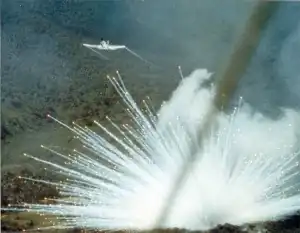
Background WWII Lewisite poster Dropping of white phosphorus bomb. Highly persistent
Skin primary route of exposure when in liquid form; pulmonary and GI tracts as routes in vapor form Types Pathophysiology Alkylation of DNA, RNA, and protein causing cell death
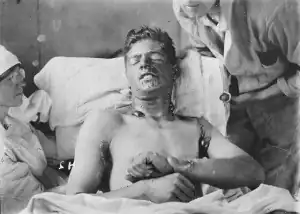
Depletes glutathione causing cellular membrane breakdown Clinical Features Bullae formation after blister chemical agent exposure (Wikimedia Commons). Lewisite (top row ) and mustard gas test with concentrations from 0.01% to 0.06% Chemical burn caused by exposure to mustard gas (World War I). Bullae formation after blister chemical agent exposure. White phosphorus injuriesSkin – Initially pruritus and stinging pain, superficial bullae appear over 24 hours. Blisters do not contain toxin
GI – abdominal pain , nausea , vomiting , diarrhea , and weight loss
Respiratory –
Usually only upper respiratory tract affected
Sinus congestion, sore throat , hoarseness. Rarely pulmonary edema
Epithelial sloughing and pseudomembranes causing inability to clear pathogens and dead tissue.
Mucous membranes and actively reproducing cells most vulnerable to severe damage
Ocular damage – occurs within 4-8 hours
conjunctivitis , chemosis, blepharospasm, and corneal perforation at even low level exposures
Bone Marrow – Leukopenia first (3-5 days), followed by anemia and thrombocytopenia Differential Diagnosis Evaluation Management Immediate decontamination, 0.5% hypochlorite solution will inactivate sulfur mustard but not appropriate for pediatric patients
Supportive care, ABCs
Thermal burn-type care
Fluid losses less than with thermal burns
No antidotes for mustard agents
N-acetylcysteine, glutathione
G-CSF for patients with bone marrow suppression
British antilewisite (BAL ) – chelating agent to reduce systemic effects from lewisite exposure.
Won’t alter the blistering effects on skin or airway.
Only used for patients with shock or severe pulmonary injury given BAL side effect
Relative contraindications to BAL: Renal disease, pregnancy Disposition See Also References