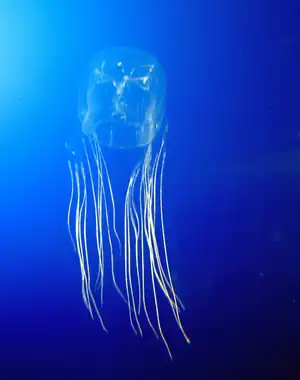
Caused by certain jellyfish from the Cubozoa class (box jellyfish) species
Usually develops within 2 hours of envenomation & can last up to 2 days [1]
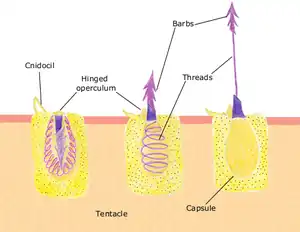
The sympathomimetic-like manifestations are due to the venom, which is proteinaceous and contains a neural sodium channel activator.
Acts on the same sodium channels that are sensitive to tetrodotoxin, causing the release of catecholamines, particularly norepinephrine and epinephrine, and also direct vasoconstrictor effects.[2]
Clinical Features
Rare but potentially fatal complication. It often involves intense pain, diffuse muscle cramps, vasconstriction and marked hypertension due to a catacholamine surge.
Beware of hypertensive emergency: Look for signs of end organ damage (ie ACS, CHF, intracranial hemorrhage, renal injury)
CT imaging of the brain in cases of headache or acute encephalopathy[3]
Management
Manage pain with 4-5% acetic acid (household vinegar) & Hot water immersion (111-114F)[4]
Fentanyl IV or other opiate for pain.
IV magnesium sulfate (0.2mmol/kg, max 10mmol in adults) given as a bolus over 5-15 minutes for pain refractory to opioids
Hypertension should be treated with short-acting titratable medications (eg., nitroglycerin, phentolamine, esmolol, nicardipine, nitroprusside) due to potential for hypotension in the later stages of toxicity