Stingray injury
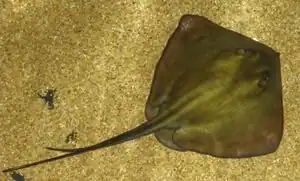
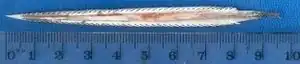
Background [ 1] Common stingray (Dasyatis pastinaca ) A stingray's stinger (ruler in cm) Stinger contains a retroserrate barb and venom glands located on the tail.
There are two phases to injury.
Phase one is d/t the traumatic injury from the barb, which can inflict injury to vital organs (e.g. Steve Irwin)
Phase two is d/t heat-labile venom release, which causes vasospasm with possible limb ischemia, cardiotoxicity, seizure, and/or death.
Generally causes local symptoms without systemic effects
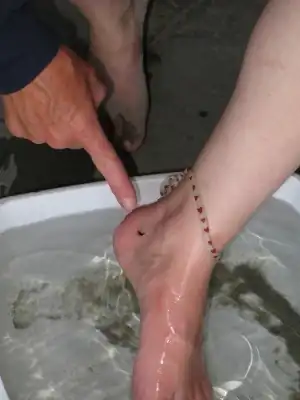
Often occurs when swimmers accidentally step on stingray in shallow water. Can be avoided by shuffling feet along bottom. Clinical Features Treatment of stingray injury with hot water. Symptoms can vary by species
Associated with puncture or jagged laceration
Local pain which can last up to 48 hours
Limb ischemia secondary to vasospasm
Cardiotoxicity (e.g. dysrhythmias, heart block, non-ST segment elevation myocardial infarction)[ 2]
Systemic symptoms can include seizures, vomiting , muscle cramps, hypotension , paralysis , and even cardiac arrest Differential Diagnosis Evaluation Clinical diagnosis
Consider x-ray to evaluate for retained foreign body (stinger) Management Immediately immerse wound in hot water (45°C for 30-90min) [ 3] Hot water is thought to denature the thermolabile venom Supportive care
Remove spines and stinger, if visible
XR for evaluation of foreign bodies
Tetanus prophylaxis Prophylactic antibiotics are controversial - if used, give doxycycline or ciprofloxacin to cover Vibrio vulnificus
Infusion of prostaglandin E1 has resulted in successful salvage of an ischemic leg, but insufficient datat exists to recommend this as routine therapy.[ 4]
There is no antivenom available. Disposition See Also External Links References
↑ Hauglid, C., Kiel, J., & Schmidt, A. (2021, April 23). Emergen-Sea Medicine: Overview of Marine Envenomations - Page 8 of 9. ACEP Now.https://www.acepnow.com/wp-content/uploads/2021/08/ACEP_August-2021.pdf
↑ Hauglid, C., Kiel, J., & Schmidt, A. (2021, April 23). Emergen-Sea Medicine: Overview of Marine Envenomations - Page 8 of 9. ACEP Now.https://www.acepnow.com/wp-content/uploads/2021/08/ACEP_August-2021.pdf
↑ Atkinson PRT. Is hot water immersion an effective treatment for marine envenomation? Emergency Medicine Journal. 2006;23(7):503–508. doi:10.1136/emj.2005.028456.
↑ Hauglid, C., Kiel, J., & Schmidt, A. (2021, April 23). Emergen-Sea Medicine: Overview of Marine Envenomations - Page 8 of 9. ACEP Now.https://www.acepnow.com/wp-content/uploads/2021/08/ACEP_August-2021.pdf