Cervical burst fracture
Background
- For C1 burst fracture, see Jefferson fracture
- Unstable if:
- Associated neurologic deficits
- Loss of >50% of vertebral body height
- >20 degrees of spinal angulation
- Compromise of >50% of spinal canal
- Axial compression > nucleus pulposus forced into vertebral body
Vertebral fractures and dislocations types
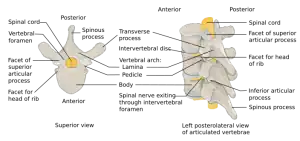
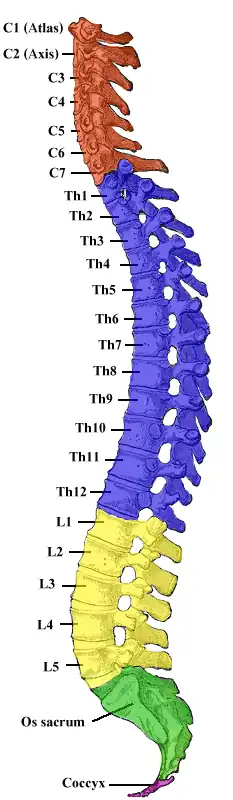
- Cervical fractures and dislocations
- Thoracic and lumbar fractures and dislocations
Clinical Features
- Neck pain in the setting of trauma
- Complete or incomplete spinal cord injury common
Differential Diagnosis
<translate>
Neck Trauma
- Penetrating neck trauma
- Blunt neck trauma
- Blunt cerebrovascular injury (BCVI)
- Vertebral artery dissection
- Carotid artery dissection
- Blunt laryngeal trauma
- Whiplash injury
- Blunt cerebrovascular injury (BCVI)
- Strangulation
- Hanging and near-hanging
- Cervical spine injury
- Cervical fractures and dislocations
- Atlanto-occipital dissociation
- Cervical injury (peds)
- Cervical spine clearance
- Spinal cord injury
- Spinal cord injury
- Incomplete spinal cord syndromes
- Central cord syndrome
- Anterior cord syndrome
- Brown-Séquard syndrome
- SCIWORA
- Neurogenic shock
</translate>
Evaluation
- Imaging
- Lateral x-ray - Comminuted body and loss of vertebral height
- AP x-ray - Vertical fracture of the body
- Consider MRI - posterior ligament often injured
Management
- Prehospital Immobilization see NAEMSP National Guidelines for Spinal Immobilization
Disposition
- Generally admit