Flexion cervical teardrop fracture
Background
- Is an unstable spine injury
Vertebral fractures and dislocations types
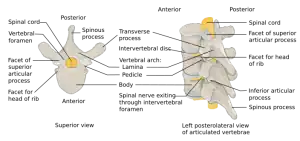
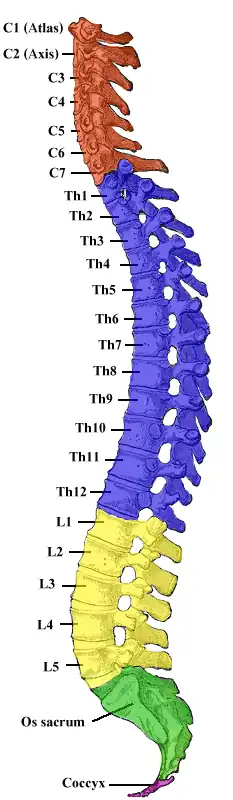
- Cervical fractures and dislocations
- Thoracic and lumbar fractures and dislocations
Clinical Features
- Severe flexion > vertebral body colliding with the one below (shallow water diving injury, MVC deceleration)
- Most commonly at C5-C6
- Displacement of teardrop shaped fragment of antero-inferior portion of superior vertebra
- Leads to posterior displacement of vertebral body and disruption of posterior longitudinal ligament
- Frequently occurs with spinal cord injury[1]
- Associated with acute anterior cervical cord syndrome
Differential Diagnosis
<translate>
Neck Trauma
- Penetrating neck trauma
- Blunt neck trauma
- Blunt cerebrovascular injury (BCVI)
- Vertebral artery dissection
- Carotid artery dissection
- Blunt laryngeal trauma
- Whiplash injury
- Blunt cerebrovascular injury (BCVI)
- Strangulation
- Hanging and near-hanging
- Cervical spine injury
- Cervical fractures and dislocations
- Atlanto-occipital dissociation
- Cervical injury (peds)
- Cervical spine clearance
- Spinal cord injury
- Spinal cord injury
- Incomplete spinal cord syndromes
- Central cord syndrome
- Anterior cord syndrome
- Brown-Séquard syndrome
- SCIWORA
- Neurogenic shock
</translate>
Evaluation
- Cervical xrays or CT
Management
Prehospital Immobilization
See NAEMSP National Guidelines for Spinal Immobilization
Hospital
- C-collar
- Consult ortho or spine as needed
Disposition
- Admit
See Also
References
- ↑ Fujimura, Y., Nishi, Y., Chiba, K. and Kobayashi, K. (1995) ‘Prognosis of neurological deficits associated with upper cervical spine injuries’, Spinal Cord, 33(4), pp. 195–202.